Why Most Engineering Graduates Fail Their First Factory Interview
Each year, thousands of engineering graduates enter factory interviews confident in their degrees. And each year, most of them leave disappointed. Not because they are not
Each year, thousands of engineering graduates enter factory interviews confident in their degrees.
And each year, most of them leave disappointed.
Not because they are not intelligent or didn’t study
‘But college education and factory requirements are two different things.’
Factory hiring managers see this gap every single day, especially in automation, electrical, and mechanical engineering.
Let’s break down why this happens and, more importantly, how you can fix it before it’s too late.
The Reality: What Hiring Managers Actually Look For
Here’s the harsh reality that most students never hear in college:
“We don’t hire marksheets. We hire problem-solvers
Factory interviewers rarely ask textbook questions. Instead, they want to know the answers to these:
Can you understand a live machine problem?
Do you know how a PLC behaves on the shop floor, not just in theory?
Can you troubleshoot when things go wrong at 2 AM?
Do you understand how production, quality, and downtime are connected?
Most students fail at these points.
5 Skills Every Automation Engineer Needs (But Colleges Don’t Teach)
1. Practical PLC Programming
Colleges may teach PLC concepts, but the factory requires you to:
· Write ladder logic from scratch
· Make changes to existing programs
· Understand real-world I/O wiring and problems
It’s not enough to know what a PLC is. You need to know how it will work in the real world.
2. Troubleshooting Mindset
Interviewers look for engineers who can:
· Find the root cause
· Think logically under pressure
· Solve problems calmly
This skill is developed only through hands-on practice.
3. Understanding Industrial Communication
Modern factories use:
· Ethernet-based PLC networks
· Robot-PLC communication
· HMI and SCADA systems
Most freshers hear these terms, but none of them have set up or tested these systems.
4. Safety & Industrial Discipline
In factories, the following are of utmost importance:
· Electrical safety
· Lockout-tagout procedures
· Safe startup and shutdown sequences
One unsafe engineer can bring down an entire plant, or even worse.
5. Confidence to Work with Real Equipment
Too many graduates are nervous during interviews because they have:
· Never laid hands on a real panel
· Never worked with live signals
· Never debugged a running system
Confidence comes from experience.
Real-Life Experiences: How Some Candidates Have Bridged the Gap
We regularly meet students who have failed their first few interviews and later cracked roles in automation companies.
What’s the difference?
They stopped memorizing answers and started:
· Working with real PLC panels
· Practicing fault-finding scenarios
· Learning how machines work, not how they are designed
One student told us:
“Interviews improved the day I stopped saying ‘I know the theory’ and started saying ‘I’ve done this on a live system.’”
How to Prepare Yourself to be Industry-Ready Before Graduation
If you are still a student, here’s what you should do now:
1. Prepare yourself on practicals, not just syllabus completion
2. Train yourself on PLCs, HMIs, and basic industrial networking
3. Practice troubleshooting, not just normal working
4. Get yourself familiar with real factory-like environments
5. Train under mentors who’ve actually worked in industry
Don’t wait until final year placements to realize that the gap exists.
Conclusion
Not getting a factory interview doesn’t mean you’re a bad engineer.
It means you were trained for classrooms, not industries.
The good news?
This gap is fixable if you take the right steps early.
At Celestial, we work closely with students and freshers to bridge this exact gap.
Our practical and industry-focused training prepares you for a real factory environment.
If you’re ready to walk into your first factory interview without the confusion, now is the time to act.
Because, as we all know
Degrees get you interviews, Skills get you hired.
- How IT/OT Integration Is Changing the Face of Manufacturing in India
(2026 Guide)
India’s manufacturing industry is standing at a critical turning point.
Rising global competition, tighter delivery timelines, and increasing pressure on margins are forcing factories to rethink how they operate.
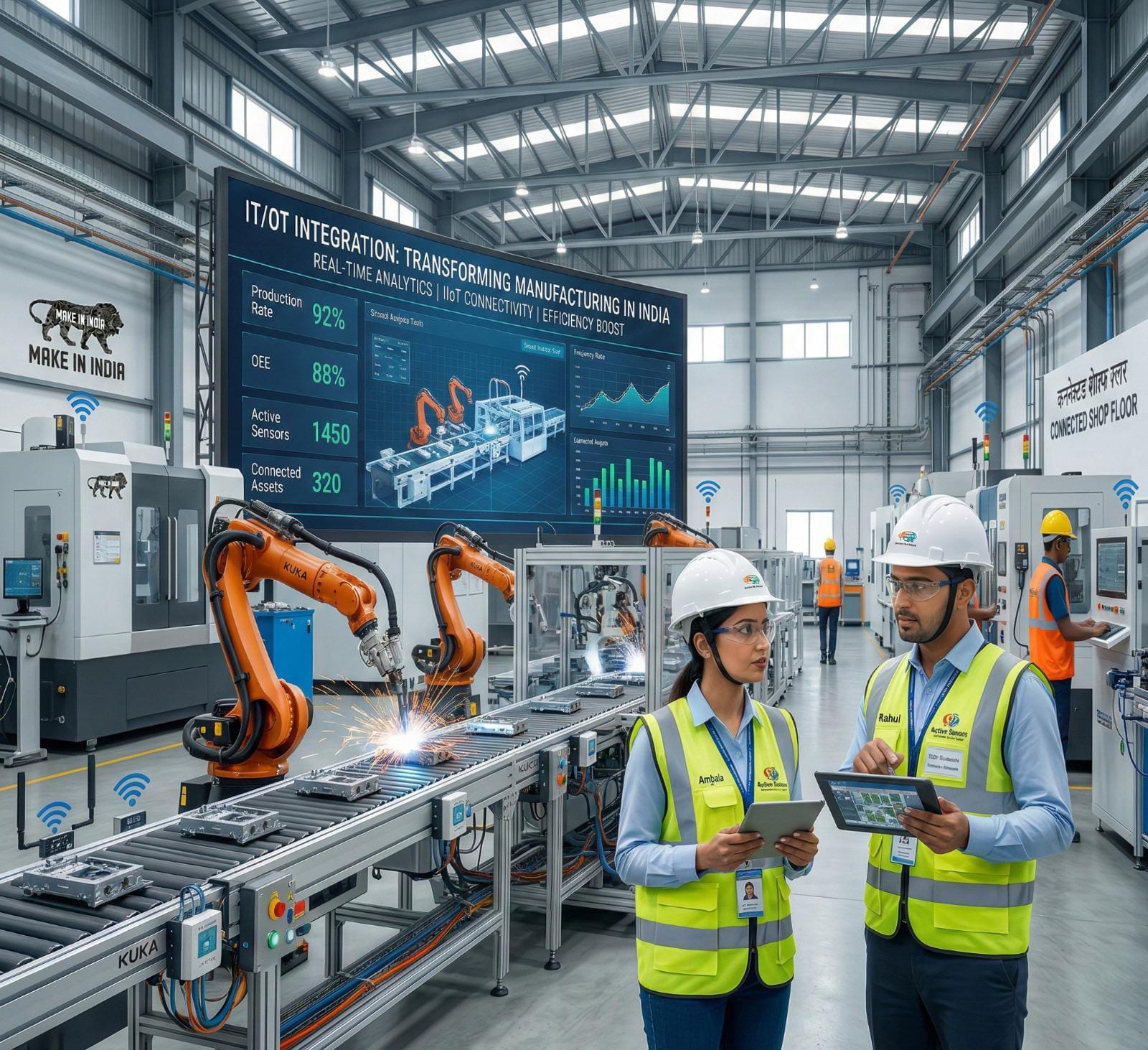
In manufacturing clusters such as Pune, manufacturers have realized that the next wave of productivity enhancement will not come from investing in more equipment but from integrating the equipment they already use.
This is where IT/OT integration comes into play.
What IT/OT Integration Really Means (Explained in Simple Terms)
Historically, factories have consisted of two separate but parallel universes:
OT (Operational Technology)
PLCs, machines, robots, sensors, SCADA systems, and the “things” that actually run the shop floor.
IT (Information Technology)
ERP, MES, databases, analytics software, dashboards, and the systems that analyze data and inform decisions.
In short, IT/OT integration refers to the process of connecting the shop floor to decision-support systems.
Why IT/OT Integration Is a Game-Changer for Indian Manufacturers
When IT and OT work together, automation becomes effective.
1. Reduced Downtime
Rather than waiting for a shutdown, factories can:
· Identify anomalies early
· Schedule maintenance before a shutdown
· Prevent unscheduled shutdowns
2. Predictive Maintenance
Sensors and PLCs provide inputs to analytics platforms that:
· Continuously monitor equipment health
· Forecast failures
· Lower costs of emergency maintenance
3. Real-Time Monitoring & Visibility
Plant managers receive:
· Real-time production views
· Alerts for quality or performance problems
· Accurate data for better decision-making
Case Study: How a Pune Manufacturer Reduced Costs by 40%
A mid-sized automotive component manufacturer in Pune was struggling with:
· Frequent machine breakdowns
· High maintenance costs
· Limited visibility into real-time production
The Challenge
Their machines were PLC-controlled and ran independently; production and maintenance-related decisions were based on manual reporting and spreadsheets.
The Integration Approach
Celestial adopted a smooth IT/OT integration approach:
· Integrated PLCs and sensors with a centralized monitoring system
· Integrated machine data with maintenance and production dashboards
· Enabled real-time alerts and predictive maintenance logic
The Results
· 40% savings in maintenance costs
· Unplanned downtime reduced significantly
· Improved production planning accuracy
The greatest benefit?
Management could finally see, understand, and respond to real-time factory data.
Why 2026 Is the Right Time to Invest
Several forces make now the ideal moment:
· Industry 4.0 adoption is accelerating across India
· Global OEMs demand data-driven, traceable manufacturing
· Automation costs are reducing while ROI is increasing
· Skilled talent and integration expertise are more accessible than ever
Factories that delay risk falling behind competitors who are already becoming smart, connected, and agile.
Conclusion
IT/OT integration is no longer a “future concept.”
It’s a strategic necessity for manufacturers who want to stay competitive in 2026 and beyond.
It’s about unlocking the full potential of what you already have.
At Celestial, we specialize in Industry 4.0 and seamless IT/OT integration.
From PLCs and SCADA to analytics and smart dashboards, we help manufacturers transform raw machine data into real business value.
If you’re ready to build a smarter, more resilient factory
Now is the time to start the conversation.